





Bilety na: NIEWINNI CZARODZIEJE | WAJDA: RE-WIZJE
Organizator: Kino MUZA
Zakończenie sprzedaży online: 05.05.2026, g. 20:30
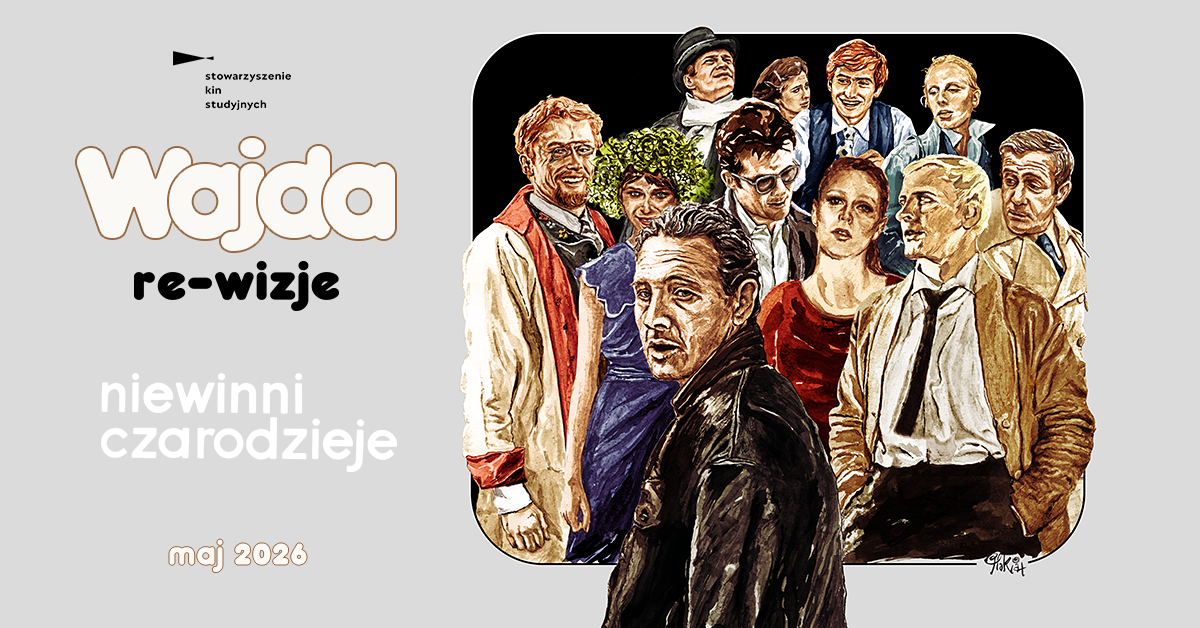
Podczas wspólnej nocy Bazyli, lekarz sportowy i muzyk jazzowy, oraz Pelagia, o której niewiele wiemy, prowadzą grę, przekomarzają się i starają uciec od własnych uczuć. Kryją się pod maską słów i póz, tak jakby prawda była najbardziej niebezpiecznym i reglamentowanym dobrem w Polsce Ludowej. Bohaterowie wędrują po nocnej Warszawie, trafiają na prywatkę u znajomych, rozmawiają z innymi młodymi ludźmi, a nad ranem wracają do mieszkania Pelagii, gdzie ich relacja zostaje wystawiona na próbę bliskości i decyzji o pozostaniu razem lub rozstaniu. Bohaterowie, świadomi zewnętrznych ograniczeń, próbują przeżyć swoją młodość, będąc zarazem nowocześni i niedojrzali.
Środowiskowy portret młodzieży, nakreślony na tle pięknie filmowanej Warszawy przełomu lat 50. i 60., z muzyką Krzysztofa Komedy, stanowi dziś świadectwo czasów początków „małej stabilizacji”. Film był bardzo niechętnie przyjęty przez ówczesną władzę, rok czekał na premierę, aż wreszcie lekko ocenzurowany trafił do wąskiej dystrybucji. Jest pierwszym dziełem Wajdy o tematyce współczesnej i jednym z dowodów rodzącej się w Polsce Nowej Fali.
[ENG]
During a single night spent together, Bazyli, a sports doctor and jazz musician, and Pelagia, about whom we know very little, engage in a subtle game—teasing each other and trying to flee from their own emotions. They hide behind words and poses, as if truth were the most dangerous and strictly limited commodity in People’s Poland. Roaming through nocturnal Warsaw, they drift from one encounter to another, attend a private party at friends’ place, talk with other young people, and at dawn return to Pelagia’s apartment, where their relationship is finally tested by intimacy and the choice between staying together or parting ways. Aware of the external constraints surrounding them, they attempt to live out their youth, poised between modern self-awareness and emotional immaturity.
A generational portrait of young people set against the beautifully filmed Warsaw of the late 1950s and early 1960s, accompanied by Krzysztof Komeda’s jazz-inflected score, the film stands today as a vivid document of the era of the early “little stabilization.” Poorly received by the authorities, it waited a year for its release and eventually reached audiences only in a lightly censored, limited distribution. It was Wajda’s first film to address contemporary subject matter and one of the earliest signs of the emerging Polish New Wave.
Środowiskowy portret młodzieży, nakreślony na tle pięknie filmowanej Warszawy przełomu lat 50. i 60., z muzyką Krzysztofa Komedy, stanowi dziś świadectwo czasów początków „małej stabilizacji”. Film był bardzo niechętnie przyjęty przez ówczesną władzę, rok czekał na premierę, aż wreszcie lekko ocenzurowany trafił do wąskiej dystrybucji. Jest pierwszym dziełem Wajdy o tematyce współczesnej i jednym z dowodów rodzącej się w Polsce Nowej Fali.
[ENG]
During a single night spent together, Bazyli, a sports doctor and jazz musician, and Pelagia, about whom we know very little, engage in a subtle game—teasing each other and trying to flee from their own emotions. They hide behind words and poses, as if truth were the most dangerous and strictly limited commodity in People’s Poland. Roaming through nocturnal Warsaw, they drift from one encounter to another, attend a private party at friends’ place, talk with other young people, and at dawn return to Pelagia’s apartment, where their relationship is finally tested by intimacy and the choice between staying together or parting ways. Aware of the external constraints surrounding them, they attempt to live out their youth, poised between modern self-awareness and emotional immaturity.
A generational portrait of young people set against the beautifully filmed Warsaw of the late 1950s and early 1960s, accompanied by Krzysztof Komeda’s jazz-inflected score, the film stands today as a vivid document of the era of the early “little stabilization.” Poorly received by the authorities, it waited a year for its release and eventually reached audiences only in a lightly censored, limited distribution. It was Wajda’s first film to address contemporary subject matter and one of the earliest signs of the emerging Polish New Wave.
*******
Bezpieczne zakupy w Bilety24. W przypadku odwołania wydarzenia, gwarantujemy automatyczny zwrot środków potwierdzony komunikatem wysyłanym na adres e-mail, podany podczas zakupu.